Dental Habits That Quietly Damage Your Smile
You brush your teeth twice a day, floss daily too, and visit your dentist for checkups, yet you might still be engaging in habits that undermine all your good oral hygiene efforts. Many damaging dental habits don’t feel harmful in the moment, making them easy to overlook or dismiss as harmless. These seemingly minor behaviors accumulate over months and years, slowly wearing down enamel, irritating gum tissue, and creating conditions in which decay and other problems develop more easily. Understanding which common habits pose the greatest risks helps you protect your smile and avoid unnecessary dental problems down the road.
The good news is that, once you recognize these harmful patterns, most are relatively easy to change. Breaking a harmful dental habit doesn’t require a drastic lifestyle change or expensive intervention. It simply takes awareness, commitment, and sometimes a bit of creativity to replace the behavior with a healthier alternative. Let’s explore the most common habits that damage teeth and gums so you can identify which ones might be affecting your oral health.
Using Your Teeth as Tools Invites Disaster
Your teeth are designed for biting and chewing food, not for:
- opening packages
- tearing tags off clothing
- holding items when your hands are full
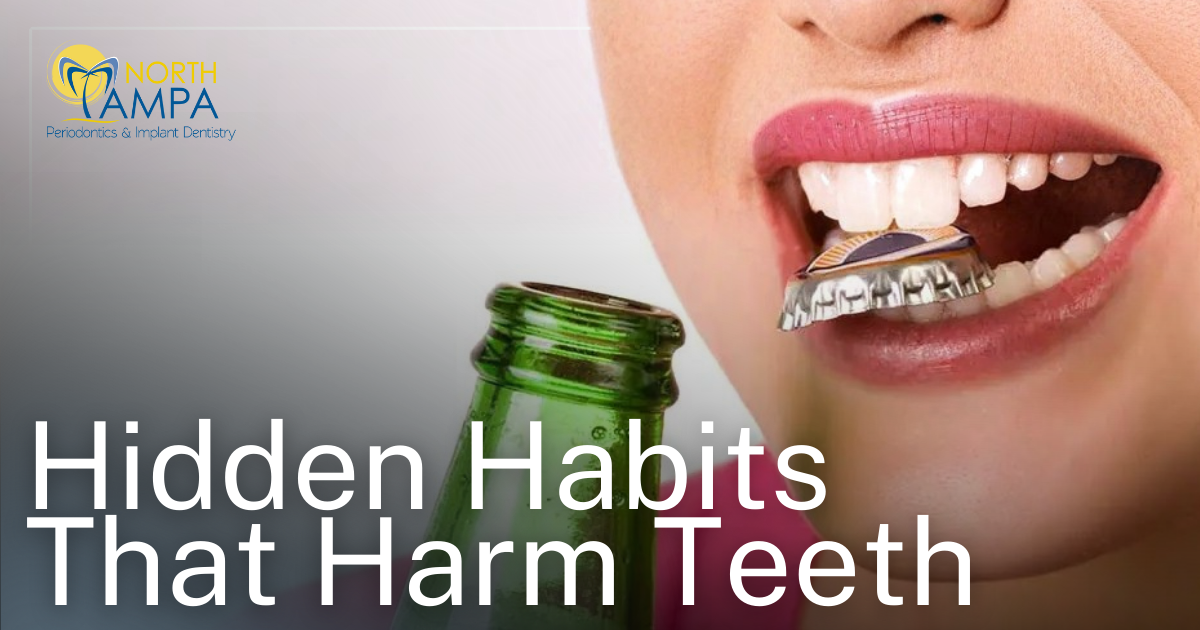
- prying off bottle caps
Using your teeth as a tool may seem convenient in the moment, but it puts tremendous stress on your teeth in ways they weren’t built to handle. The force required to tear through packaging or grip hard objects can chip enamel, crack teeth, or even break dental work like crowns and fillings. These injuries often require expensive repairs and sometimes result in permanent damage. The risk becomes even greater with age, as teeth naturally become more brittle over time. What your teeth could handle in your twenties might cause serious damage in your fifties or sixties.
Brushing Too Hard Does More Harm Than Good
Many people believe that brushing harder means cleaning better, but aggressive brushing actually damages your teeth and gums. When you scrub with too much force, you wear away tooth enamel and cause gum tissue to recede, exposing the sensitive root surfaces underneath. This leads to increased sensitivity to hot and cold temperatures, creates a rough tooth surface where plaque can accumulate more easily, and gives your teeth a worn, aged appearance.
The damage from overly aggressive brushing happens gradually, making it difficult to notice until significant harm has occurred. You might observe that your gums are pulling away from your teeth, that you experience sharp pain when consuming cold drinks, or that your teeth look longer than they used to. These signs indicate that your brushing technique needs adjustment. Switch to a soft-bristle toothbrush if you haven’t already, and focus on gentle circular motions rather than harsh back-and-forth scrubbing. Your toothbrush should glide across your teeth and gums rather than pressing hard against them.
Grinding & Clenching Wear Down Your Smile
Teeth grinding and jaw clenching, whether during the day or while you sleep, exert enormous pressure on your teeth and jaw joints. This habit, called bruxism, slowly wears down tooth enamel, flattens the biting surfaces of your teeth, and can cause chips, cracks, and fractures. Beyond tooth damage, grinding and clenching contribute to jaw pain, headaches, and problems with your temporomandibular joint. Many people don’t realize they grind their teeth at night until a dentist notices the telltale wear patterns or a partner complains about the sound.
During the day, practice keeping your teeth slightly apart with your lips closed and your tongue resting gently against the roof of your mouth. This position relaxes your jaw muscles and makes clenching less likely. For nighttime grinding, a custom nightguard protects your teeth from damage and often reduces the frequency of grinding episodes by preventing your teeth from fully contacting each other.
Snacking & Sipping Create Constant Acid Attacks
Frequent snacking and sipping on sugary or acidic beverages throughout the day keep your teeth under constant attack. Every time you eat or drink something other than water, bacteria in your mouth feed on the sugars and produce acid that weakens tooth enamel. Your saliva needs time to neutralize this acid and remineralize your teeth, but constant snacking doesn’t allow your mouth to recover. The result is an environment in which decay develops much more easily.
The problem extends beyond obviously sugary treats. Sports drinks, flavored coffee, diet soda, and even healthy options like fruit juice contain acids and sugars that damage teeth when consumed frequently. Sipping these beverages over an extended period is particularly harmful because it prolongs acid exposure. If you enjoy these drinks, consume them with meals rather than throughout the day, and rinse your mouth with water afterward. Better yet, drink plain water between meals and save other beverages for specific occasions.
Ignoring Problems Makes Everything Worse
Perhaps the most damaging dental habit is postponing care when you notice something wrong. Dental problems do not normally improve on their own, and delaying treatment almost always results in more extensive damage, more complicated procedures, and significantly higher costs.
The temporary discomfort of addressing a problem today is far less than the pain and expense of dealing with a dental emergency later. So give us a call and schedule a treatment at North Tampa Periodontics and Implant Dentistry, located in Tampa, FL.